
Mastering Freight Tonnage: A Complete Guide
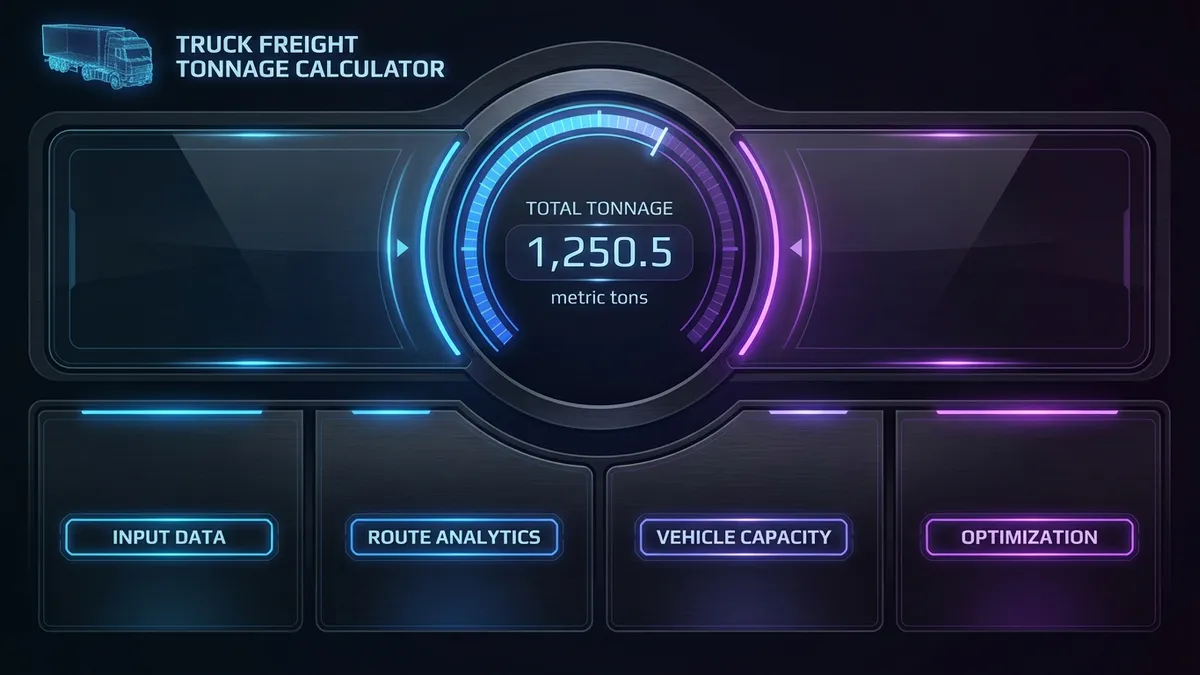
Accurate weight calculation is the backbone of the logistics industry. Whether you are a shipper, carrier, or freight broker, knowing the exact truck/freight tonnage of your cargo is critical for safety, compliance, and cost management. Our Truck Freight Tonnage Calculatorsimplifies this process by allowing you to combine multiple line items and instantly convert between Pounds, Short Tons (US), and Metric Tons.
How to Use This Calculator
Calculating your total freight load is straightforward with our tool. Here is a step-by-step guide:
- Add Line Items: For each type of cargo you are shipping, enter a description (optional), the quantity of units (e.g., pallets, boxes), and the weight per unit.
- Select Units: Choose the correct unit for your input weight (lbs, kg, Short Tons, or Metric Tons). The calculator handles the conversions automatically.
- Review Totals: The calculator instantly updates the total weight in three common formats:
- Pounds (lbs): Standard for smaller shipments and LTL (Less Than Truckload).
- Short Tons (US): The standard "Ton" used in the United States (2,000 lbs).
- Metric Tons (MT): The global standard for international shipping (1,000 kg).
Understanding Freight Units: Short Ton vs. Metric Ton
One of the most common sources of confusion in logistics is the word "Ton". Depending on where you are and what you are shipping, a "Ton" can mean different things.
Short Ton (US)
Used primarily in the United States.
- 1 Short Ton = 2,000 lbs
- 1 Short Ton ≈ 907.18 kg
- Common for domestic trucking and rail.
Metric Ton (MT)
The international standard.
- 1 Metric Ton = 1,000 kg
- 1 Metric Ton ≈ 2,204.62 lbs
- Common for imports/exports and air freight.
The Cost of Inaccuracy
Getting your freight tonnage wrong can be expensive. Here is why precision is non-negotiable:
- Re-Weigh Fees: Carriers verify weight at terminals. If your BOL weight is lower than the actual weight, they will issue a "Re-Weigh Certificate" and charge you for the difference, plus an administrative fee.
- Rate Adjustments: Freight rates are often based on weight tiers. Pushing a shipment from 19,000 lbs to 20,000 lbs might bump you into a different pricing bracket or require a different truck type.
- Fines & Safety: Trucks have strict Gross Vehicle Weight (GVW) limits (typically 80,000 lbs in the US). Overloaded trucks face heavy fines at weigh stations and pose significant safety risks. Learn more about Federal Size and Weight Limits.
Common Freight Weight Reference
Estimating weight before you have access to a scale? These ballpark figures for common freight items help you plan loads and avoid overweight surprises at the weigh station.
| Item | Typical Weight | Notes |
|---|---|---|
| Standard pallet (48×40 GMA) | 33-48 lbs | Hardwood vs. softwood varies |
| Loaded pallet (mixed goods) | 1,500-2,500 lbs | Avg. warehouse pallet |
| 55-gallon steel drum (full, water) | ~484 lbs | Drum itself weighs ~40 lbs |
| IBC tote (275 gal, full) | ~2,400 lbs | Depends on liquid density |
| Dry van trailer (max payload) | ~44,000 lbs | 80,000 GVW minus tractor + trailer |
These numbers give you a starting point, but always confirm with actual scale readings before finalizing your bill of lading. Even a 200-lb discrepancy on a multi-stop route can cascade into compliance headaches at every weigh station along the way.
Pro Tips for Freight Management
To optimize your shipping operations and avoid surprises:
- Include Packaging Weight: Don't just weigh the product. Include pallets (approx. 40-50 lbs each), shrink wrap, and dunnage.
- Know Your Density: Weight is only half the equation. Use our Freight Class Calculator to determine the density and classification of your shipment, which impacts LTL rates — then price the move itself, fuel and fees included, with our LTL freight calculator.
- Check Axle Limits: Total weight matters, but so does distribution. Ensure your load is balanced to comply with per-axle weight limits.
- Use a Shipping Cost Calculator to compare carrier rates once you have your final tonnage figures locked down.
- Running your own equipment? Payload determines what you can haul, but the tractor payment determines what you keep. Our semi truck loan calculator converts a rig's monthly payment into cents per mile so you can price loads against it.
Frequently Asked Questions
Disclaimer: This calculator provides estimates for planning purposes only. Always verify weights with certified scales and consult official carrier guidelines for billing.